If you’re a salon owner, hair stylist, or professional colorist, you’ve likely faced that frustrating moment: the formula was correct, the timing was right, yet the grey still looks translucent, lighter than the rest, or completely resistant to color. Resistant greys are one of the most common chair-side challenges because their structure literally rejects pigment penetration. With the right formulation logic and application approach-paired with predictable professional systems like Duomo Pro’s Italian-inspired shade collections-you can dramatically improve coverage and consistency.
Why Resistant Grey Hair Rejects Color
Understanding resistant grey hair starts with hair fiber science. Grey hair isn’t simply “hair without pigment.” Structurally, it behaves very differently.
1. Tightly Packed Cuticle Layers
Grey hair often develops a more compact cuticle structure, meaning the outer layers of the hair shaft lie flatter and tighter.
This matters because:
- Color molecules must pass through the cuticle to reach the cortex.
- A tightly packed cuticle blocks penetration.
- Even strong formulations may struggle to deposit properly.
According to cosmetic science research, the hair cuticle acts as the primary barrier controlling chemical penetration in coloring processes.
In the chair, this is when you see color sitting on the surface instead of locking into the fiber.
2. Loss of Natural Oils (Sebum)
Grey hair also produces less natural oil, making the fiber:
- drier
- rougher
- more hydrophobic
Hydrophobic hair tends to repel water-based color formulations, which makes pigment absorption slower.
This is why some resistant greys look like they never absorbed the formula fully, even when timing was correct.
3. Coarser Texture
Many grey hairs grow back thicker and wiry.
A thicker diameter hair fiber means:
- stronger structural barriers
- more resistance to chemical processes
- slower penetration of color molecules
Professional education resources such as Milady’s hair structure training explain how coarse hair requires longer processing and stronger alkalinity for consistent deposit.
4. Product Buildup or Hard Water Minerals
Another overlooked cause is barrier buildup.
Common culprits include:
- silicone styling products
- mineral deposits from hard water
- heavy dry shampoo residue
These substances coat the hair and create a physical barrier preventing color from entering the cortex. Check our guide on 100% grey coverage formula framework to help get best results.
Signs You’re Dealing With Resistant Greys
You’re likely dealing with resistant grey hair when:
- Greys appear lighter than the rest of the formula
- Coverage looks translucent
- Color fades faster on grey areas
- Hairline greys refuse to take color
- Even permanent color struggles to cover fully
The hairline and temples are often the most resistant zones, which is why many colorists apply there first.
What to Change in Your Approach
Resistant greys rarely require a completely different color line-but they do require a different strategy.
Let’s walk through the adjustments that make the biggest difference.
Step 1: Use the Correct Base Shade for Coverage
Pure fashion tones rarely cover resistant greys alone.
For reliable coverage, professional systems combine natural base shades with target tones.
Example formulation logic:
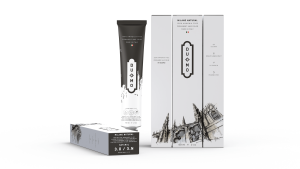
- Milano Natural base shades provide the pigment foundation needed for grey coverage.
- Desired tones (like Modica Chocolate or Firenze Copper) can then be blended to achieve the target result.
A typical approach might be:
- 50% Natural base
• 50% target tone
This ensures the grey hair receives enough underlying pigment to anchor the color.
Step 2: Choose the Right Developer Strength
Developer choice directly affects cuticle opening.
For most resistant grey coverage services:
20 volume developer is the standard choice because it:
- opens the cuticle sufficiently
- allows pigment penetration
- provides reliable deposit
Some extremely resistant cases may benefit from slightly higher lift, but aggressive developer strengths can create hot roots or uneven lift.
Consistency matters more than brute strength.
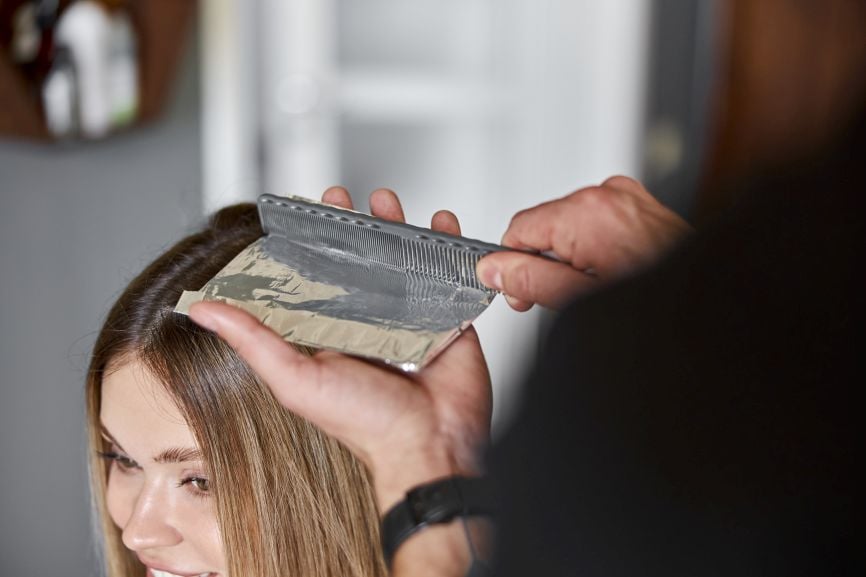
Step 3: Apply Color to Resistant Areas First
Strategic application is often the difference between perfect coverage and patchy results.
Start with:
- hairline
- temples
- part line
- densest grey zones
These areas receive the longest processing time, giving pigment more opportunity to penetrate.
Step 4: Use Smaller Sections and Heavy Saturation
Grey hair needs maximum contact with the formula.
Best practice:
- take thinner sections
- saturate heavily
- avoid dry spots
In real salon scenarios, resistant greys often fail because sections were too large or application too light.
Think saturation, not speed.
Step 5: Allow Full Processing Time
Resistant greys almost always need the full processing window.
Typical range:
30–45 minutes depending on formulation.
Removing color early can leave greys semi-translucent instead of fully covered.
Step 6: Clarify Before the Service
If buildup is suspected, clarify before coloring.
This removes barriers such as:
- mineral deposits
- silicone layers
- product residue
A clean fiber allows the color to interact directly with the cuticle and cortex.
Professional Formulation Example
Here’s a practical example used in many salons.
Scenario:
Client with 70% resistant grey at hairline wanting a warm brunette result.
Possible formulation logic:
- Milano Natural base for coverage
- Modica Chocolate for tone depth
Applied with 20 volume developer.
The natural base ensures pigment anchoring, while the tonal shade delivers the desired result.
Why Professional Shade Systems Matter
Grey coverage is rarely about one magic shade.
It’s about predictable formulation logic.
Professional color systems like Duomo Pro’s Italian-inspired collections are designed with:
- structured natural bases
- controlled tonal families
- predictable deposit behavior
Collections such as Milano Natural, Modica Chocolate, Firenze Copper, Vatican Red, and Vesuvius Ash allow colorists to build formulas that balance coverage and tone without sacrificing consistency.
When the system is predictable, resistant grey services become far easier to control.
Common Mistakes That Cause Grey Coverage Failure
Even experienced colorists occasionally run into coverage problems because of small mistakes.
Common issues include:
- Skipping the natural base
• Under-saturating resistant areas
• Removing color too early
• Using too weak a developer
• Ignoring product buildup
• Applying mid-lengths first instead of greys
Each of these can lead to incomplete pigment penetration.
Chair-Side Reality: The Hairline Test
Here’s something most colorists recognize.
You finish rinsing the color…
The mids look perfect.
The ends look glossy.
Then the client tilts their head and the hairline greys look lighter.
That’s the moment when resistant grey behavior shows itself.
Usually the cause is application order or insufficient saturation, not the formula itself.
FAQ: Resistant Grey Hair
How do you get resistant grey hair to take color?
Use permanent color with a natural base, apply to resistant areas first, use a 20-volume developer, saturate heavily, and allow full processing time.
What is the 50-50-50 rule for grey hair?
This rule refers to a formulation approach where 50% natural base shade and 50% target tone are used to ensure proper grey coverage while achieving the desired color result.
What developer is best for resistant grey hair?
Most professional colorists use 20 volume developer because it opens the cuticle enough for pigment penetration without causing excessive lift.
Should you use 30 developer for grey hair?
Usually no. Higher developer strengths can create uneven lift or hot roots. Proper formulation and application technique matter more than stronger developer.
What color lasts longest on grey hair?
Natural-based permanent colors generally last longer because they deposit the strongest pigment foundation within the cortex.
Why does grey hair look lighter after coloring?
Resistant grey hair sometimes fails to absorb enough pigment, leaving it translucent or reflective, which makes it appear lighter.
Should grey hair be colored on clean or dirty hair?
Grey coverage typically works best on clean hair free of buildup, especially if product residue or minerals may block color penetration.
Final Takeaway
Resistant grey hair isn’t random-it’s structural.
When the cuticle is tight, the fiber is coarse, and pigment penetration is slow, colorists need to adjust formulation, application strategy, and processing time.
Once those variables are controlled, grey coverage becomes far more predictable.
Professional systems like Duomo Pro’s shade collections-Milano Natural, Modica Chocolate, Firenze Copper, Vatican Red, and Vesuvius Ash-give colorists the formulation flexibility needed to handle even stubborn greys with confidence.