For professional colorists, salon stylists, and beauty students, reading hair color levels correctly is one of the first skills that affects every formula you create. The challenge is that natural depth, artificial color, lighting, warmth, and grey percentage can all make a client’s hair look lighter or darker than it really is. Duomo Pro supports salon professionals with Italian-made, ammonia-free, PPD-free professional color designed for thoughtful formulation, and this guide gives you a clear hair color levels 1-10 chart you can use as a practical reference before choosing tone, developer, or grey coverage strategy.
Here’s the thing: level reading looks simple on paper, but it gets tricky in real salon conditions. A client may sit in your chair looking like a level 7 at first glance, only for the nape to reveal a level 5 base mixed with a high percentage of grey. That difference matters. It changes your target shade, developer choice, pigment balance, processing expectations, and final result.
Use this guide as a fast reference first, then keep reading for the professional details that matter most when grey hair changes the way you read the head.
What Are Hair Color Levels? The 1–10 Scale Explained
Hair color levels measure how light or dark the hair is on a universal professional scale from 1 to 10. Level 1 is black, the darkest level, and level 10 is lightest blonde, the palest blonde level commonly used in professional color systems.
The important part is this: level only describes depth. It does not describe tone, warmth, ash, gold, copper, violet, reflect, or underlying pigment. A level 6 can be neutral, golden, ash, copper, or red, but it is still a level 6 if the depth is dark blonde.
This is where many newer colorists make their first formulation mistake. They see warmth and assume the hair is lighter, or they see ash and assume the hair is darker. Tone can change how the eye reads depth, especially under salon lighting or beside grey hair. Before you formulate, separate these three questions:
- What is the natural level?
- What is the tone or reflect?
- How much grey is present?
Once those are separated, your formula becomes much more controlled.
The Complete Hair Color Levels 1–10 Chart
This hair color levels 1-10 chart is the core reference. Use it to identify natural depth before assessing tone, underlying pigment, grey percentage, and developer needs.
| Level | Name | General Description |
| 1 | Black | Darkest level, minimal light reflection |
| 2 | Darkest Brown | Very deep brown, close to black |
| 3 | Dark Brown | Rich, deep brown |
| 4 | Medium Brown | Natural medium brown |
| 5 | Light Brown | Lighter brown with visible warmth |
| 6 | Dark Blonde | Transition level between brown and blonde |
| 7 | Medium Blonde | True medium blonde |
| 8 | Light Blonde | Light, bright blonde |
| 9 | Very Light Blonde | Pale blonde |
| 10 | Lightest Blonde | Palest possible level, near-white blonde |
For quick salon use, remember the broad pattern: levels 1–5 sit in the black-to-brown family, level 6 is the bridge between brown and blonde, and levels 7–10 move through medium blonde to lightest blonde.
This is also why a natural hair color levels 1-10 chart should never be used alone for grey coverage. Grey hair can visually dilute the whole head, making a deeper natural base appear lighter than it actually is.
How to Accurately Read a Client’s Natural Level
To read a client’s natural level accurately, do not rely on the first section of hair you see. The front hairline, crown, and ends are often affected by sun exposure, heat styling, previous color, mineral buildup, toners, glosses, or natural fading. The nape is usually the best starting point because it often has the least sun exposure and the most consistent natural depth.
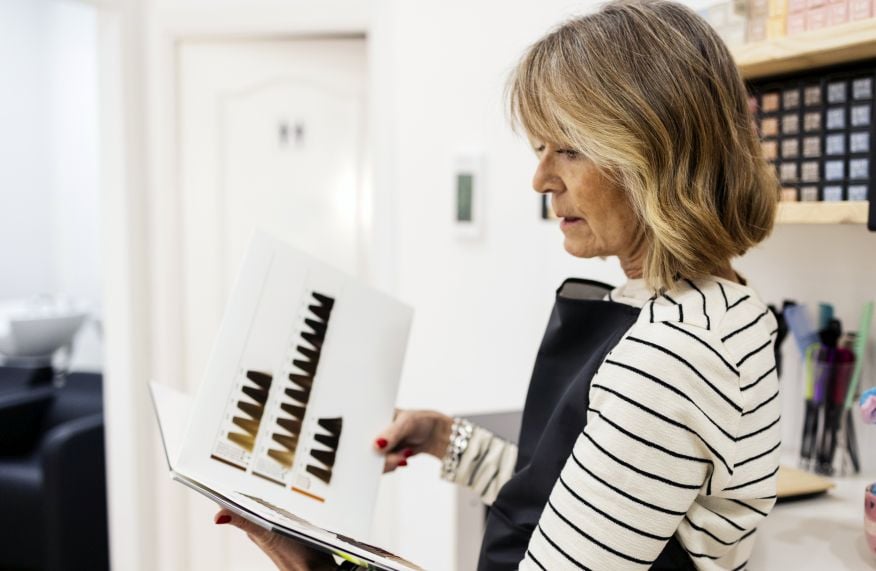
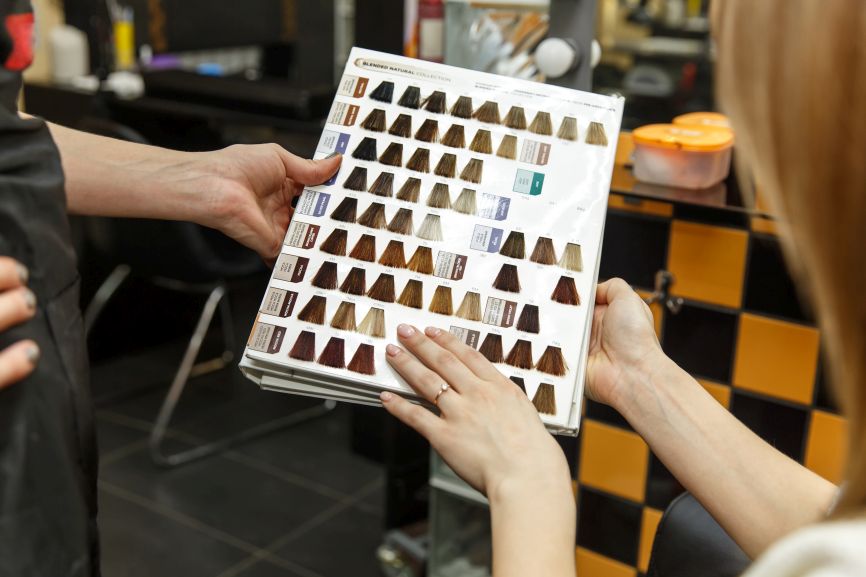
Use a professional swatch book and compare the client’s hair under neutral lighting. Avoid reading levels under strong warm bulbs, direct window glare, ring lights, or colored walls that reflect onto the hair. Even small lighting shifts can make a level 5 look like a 6, or a warm level 7 look brighter than it really is.
For the cleanest reading, follow this process:
- Separate the nape section.
- Compare only the pigmented hair to the swatch book.
- Ignore grey or white strands during the base-level read.
- Assess the mids and ends separately if the client has previous color.
- Record both natural level and grey percentage before formulating.
That third step is the one that often gets missed. Grey hair should not be included when deciding the client’s natural pigmented level because grey does not contain the same melanin depth you are trying to measure.
A real salon example: a client with 60% grey around the front hairline may visually appear like a level 8 in the mirror, but the nape could reveal a natural level 5. If you formulate as though the whole head is level 8, your grey coverage and final depth may miss the target.
How Grey Hair Changes the Level Reading
Grey hair changes the level reading because grey, white, and silver strands do not have the same natural pigment structure as pigmented hair. On the 1–10 scale, colorists are not truly “reading” grey as a level. Instead, they are reading two separate things at once: the level of the remaining pigmented hair and the percentage of grey diluting the visual result.
That difference is huge.
A head that looks like a level 7 from across the room may actually be a level 5 base with 50% grey. The grey strands reflect light and soften the overall depth, making the hair appear lighter than the natural base really is. But when you formulate for coverage, the underlying pigmented level still matters.
This is the difference between visual level and natural base level.
Visual level is what the eye sees when grey and pigmented hair are mixed together. Natural base level is the actual depth of the pigmented hair that remains. For grey coverage, the natural base level is the more important formulation anchor.
Grey can also change the way tone behaves. Because grey hair lacks natural warm pigment, applying certain cool or ash shades directly can create a flat, smoky, dull, blue, or greenish result, especially on high-percentage grey. In many cases, the formula needs enough natural or warm-balanced support to create believable coverage instead of a hollow-looking deposit.
When the level reading is correct but coverage still looks translucent or uneven, resistant grey hair may need a more targeted approach to developer choice, saturation, timing, and formula balance.
This is also where developer logic becomes more important. Resistant grey, coarse grey, or high-percentage grey may need a different approach than soft, low-percentage grey. Once you know the natural level and grey percentage, the next question is not just “What shade do I want?” It becomes “How do I get this hair to accept and hold the target shade evenly?”
That connects directly to developer choice. For many grey coverage situations, 20 volume is a common professional standard, but resistant grey or certain high-percentage grey cases may require adjusted timing, shade balance, sectioning discipline, or brand-specific developer guidance. This is why a level chart is only step one.
Once the natural level and grey percentage are clear, choosing the right developer volume for grey coverage becomes much easier because the formula can be adjusted based on resistance, density, and the target result.
After level comes percentage. After percentage comes underlying pigment. After underlying pigment comes formulation.
Once you’ve separated the client’s natural level from the percentage of grey, the professional grey coverage formula framework helps translate that reading into a balanced formula that avoids banding, hot roots, and uneven coverage.
A stronger grey consultation might sound like this:
“Your natural pigmented hair is reading around a level 5, but you have about 50% grey through the front and sides. That means we need to formulate for a level 5 base with grey dilution, not simply treat the whole head like a level 7.”
That one explanation builds trust with the client and gives the colorist a more accurate technical path.
Underlying Pigment by Level: What Shows Up When You Lift
Once you identify the level, the next variable is underlying pigment. Every natural level has a predictable warm pigment that becomes visible when the hair is lightened. This is why lifting from dark brown to blonde often reveals red, orange, gold, or yellow stages before reaching the final target.
After you confirm the client’s natural level, the underlying pigment map helps predict which warm tones will appear during lifting and what neutralizing tone may be needed.
A simplified underlying pigment map looks like this:
| Level Range | Common Underlying Pigment |
| Levels 1–4 | Red to red-orange |
| Levels 5–6 | Orange to orange-gold |
| Levels 7–10 | Gold, yellow, pale yellow |
This matters because the toner or target shade must respond to what is actually exposed during lifting. If a level 5 client lifts to orange, violet alone will not solve the problem because violet is used for yellow control. Orange needs blue-based control. Red-orange may need blue-green or green support depending on the exact reflect and desired finish.
For grey coverage, underlying pigment matters differently. The pigmented hair still follows the expected level map, but grey hair does not contribute the same warmth. That is why high-grey formulas often need thoughtful balance rather than a simple target shade application.
How Many Levels Can You Lift in One Session?
In standard professional color guidance, oxidative color can lift up to about four levels on healthy, virgin hair. For example, a natural level 4 may be able to reach around a level 8, while a natural level 6 may be able to reach around a level 10 under the right conditions.
But that is general guidance, not a guarantee. Hair history, porosity, texture, density, grey percentage, previous artificial color, and product instructions all matter.
A simple developer guideline often looks like this:
| Developer Volume | Approximate Lift |
| 10 volume | Up to 1 level |
| 20 volume | Up to 2 levels |
| 30 volume | Up to 3 levels |
| 40 volume | Up to 4 levels |
The key word is “approximate.” Developer choice should always follow the professional color line’s instructions, the desired result, the condition of the hair, and the client’s color history.
Also, oxidative color does not reliably lift previously colored hair. If the client has artificial color on the mids and ends, you are no longer dealing with a simple virgin-level calculation. That may require a corrective approach, pre-lightening, color remover, strand testing, or a multi-session plan.
Let’s be real: most disappointing blonde results happen because someone tries to force too many levels in one appointment. The hair may lift unevenly, expose unwanted warmth, or lose condition before the target is reached.
For salon professionals, the safer consultation is clear and honest: “This is your current level, this is the target level, and this is how many levels we need to move. Based on your hair history, we may need more than one appointment.”
That protects the client’s hair and your final result.
FAQs
What’s the difference between hair color level and tone?
Hair color level describes how light or dark the hair is on the 1–10 scale. Tone describes the reflect or color direction, such as ash, gold, copper, violet, red, or neutral. A level 7 can have many different tones, but its depth remains level 7. For accurate formulation, read the level first, then assess tone.
How do I know my natural hair level if I’ve colored my hair before?
Look at the new growth, preferably near the nape, where the hair is less affected by sun exposure and styling. Compare the regrowth to a professional swatch book under neutral lighting. Do not use the colored mids and ends to decide the natural level because artificial color, fading, and porosity can distort the reading. If the regrowth is very short, wait for more visible growth or assess carefully in multiple areas.
Does grey hair count as a level on the 1–10 scale?
Grey hair does not count as a normal level in the same way pigmented hair does because it lacks natural melanin. A colorist should assess the level of the remaining pigmented hair separately from the percentage of grey. For example, the client may have a level 5 natural base with 50% grey. That is very different from simply calling the whole head a level 7.
Can I go more than 4 levels lighter in one appointment?
In many professional situations, more than four levels of lift requires pre-lightening rather than standard oxidative color alone. Whether it can be done in one appointment depends on the hair’s condition, color history, texture, porosity, and target result. Previously colored hair is especially unpredictable because color does not reliably lift artificial color. A strand test is the safest way to predict lift and condition.
Why does my level reading look different at the roots versus the ends?
Roots often show the natural level more clearly, while ends may look lighter, warmer, darker, duller, or more porous because of previous color, heat styling, sun exposure, minerals, and fading. That is why colorists should assess the roots, mids, and ends separately. The natural level helps guide the base formula, while the condition and color history of the ends guide refreshing, glossing, toning, or corrective work.
Once you’ve confirmed the natural level and grey percentage, the professional grey coverage formula framework walks through how to translate that into the right formulation.