If you’re a salon owner, colorist, or educator, you already know the truth: “grey coverage” isn’t the hard part; predictable grey coverage is. The pain points show up in real time: roots that pop warm (hot roots), temples that laugh at your formula, mids that go muddy from overlap, and clients who notice every single inconsistency under salon lighting. Duomo Pro helps by giving you a shade system built for controlled tone and professional consistency, so your grey coverage isn’t guesswork-it’s repeatable logic.
What “100% Grey Coverage” actually means in the chair
“100% coverage” doesn’t mean the hair looks like a flat helmet of color. It means:
- No translucent whites in the most resistant zones (hairline/temples/crown)
- Even density of deposit at the regrowth (no sparkly gaps)
- A root result that matches the mids/ends without a bright ring or dark halo
- Longevity that doesn’t expose grey after 7–10 shampoos
If you get those four outcomes, you’re delivering professional coverage; not just “it looks fine today.”
Why greys resist-and why hot roots and banding happen
Grey/white hair often behaves like a different fiber: tighter cuticle, different porosity patterns, and less natural pigment to “buffer” tone-so your formula has to do more of the work.
Hot roots (the common pro mistake)
Hot roots happen when the regrowth lifts warmer than you planned while the deposit lags behind. Two frequent triggers:
- Over-strong developer at the root (lift increases, deposit control decreases)
- Not enough “base pigment” in the mix for resistant grey
Banding (why the mids go dark or muddy)
Banding is usually self-inflicted and cumulative:
- Permanent color gets dragged through on every retouch
- Previously colored hair is more porous and grabs pigment unevenly
- The line of demarcation gets darker with each overlap
(And yes-time pressure in the chair is how it starts. But the fix is a system.)
See the full guide on resistant grey hair and why it rejects color.
The Professional Grey Coverage Formula Framework
Step 1 – Diagnose like a technician (not like a guesser)
Before you pick a tube, lock these in:
- Grey percentage: 25% / 50% / 75% / 90–100%
- Resistance map: temples + hairline vs crown vs nape
- Texture: fine vs coarse
- History: previous permanent, box color, metallic salts, high heat styling
- Porosity: especially through mids/ends
This is what tells you whether you need a stronger anchor (NN-style logic) or just a standard anchor (N-based).
Want Duomo’s internal method sheet for this exact decision-making? The Product Knowledge hub breaks down Duomo Pro’s shade logic, developer approach, and formulation rules in one place:
Step 2 – Choose the anchor: your N/NN strategy
For high-percentage grey, you need a coverage backbone-a natural base designed to fill the absence of underlying pigment.
Rule of thumb (professional, reliable):
- Up to ~50% grey: you can often keep your target reflected strong, with a lighter anchor.
- 50–75% grey: stronger anchor needed.
- 75–100% grey or very resistant: anchor becomes the formula.
This is the logic behind why “N vs NN” even exists in pro color systems.
Step 3 – The 50/50 rule (coverage + tone without compromise)
This is the framework most pro education sources converge on, and it works because it respects how grey behaves:
50% Natural anchor + 50% target shade (same level)
- Anchor = Natural (N) / Natural-Natural (NN equivalent) logic
- Target = the reflect you actually want the client to wear
If the grey is extremely resistant, shift it:
- 60/40 (anchor/target) for stubborn zones
- 70/30 at temples/hairline when needed
This prevents two disasters at once: see-through greys and muddy, hollow tone.
Important nuance: Pure ash-only formulas are a common reason coverage looks dull, hollow, or slightly green/grey on white hair-because you’re asking cool reflect to do the job of base pigment. (Use ash for control, not as the entire foundation.)
Step 4 – Developer strategy (why 20-volume is the workhorse)
For permanent grey coverage, 20 volume (6%) is the standard because it’s the best balance of cuticle opening + deposit performance for resistant grey.
If you’re working within the Duomo system, keep your coverage services anchored to the correct activator volume-especially on resistant grey where deposit matters more than extra lift. See the Duomo Pro’s activator options (including 20 Volume).
Avoid the trap: jumping to 30/40 at the root often increases warmth and speed of lift, but not the kind of controlled deposit grey needs-especially on a warm underlying level.
Duomo Pro connection: Duomo offers dedicated activators by volume, including 20 Volume Activator, which aligns directly with this coverage framework.
Step 5 – Application rules (this is where “perfect formulas” fail)
If you want true 100% coverage, your technique has to match your formula.
Non-negotiables:
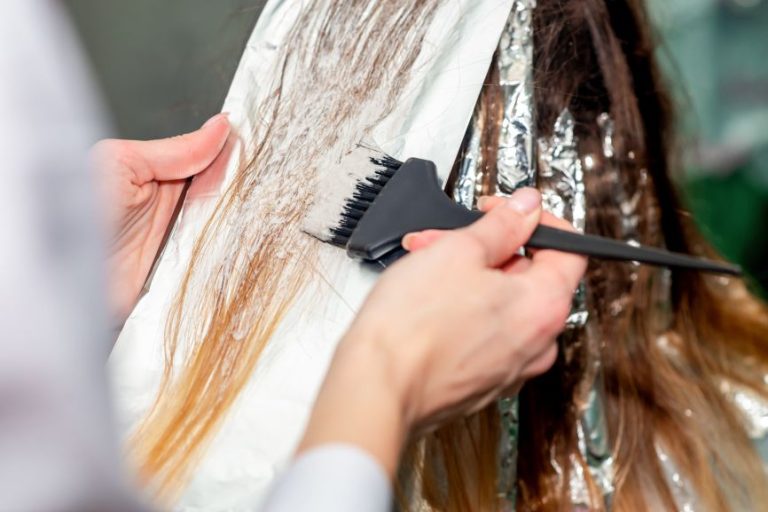
- Bowl + brush (bottles encourage under-saturation)
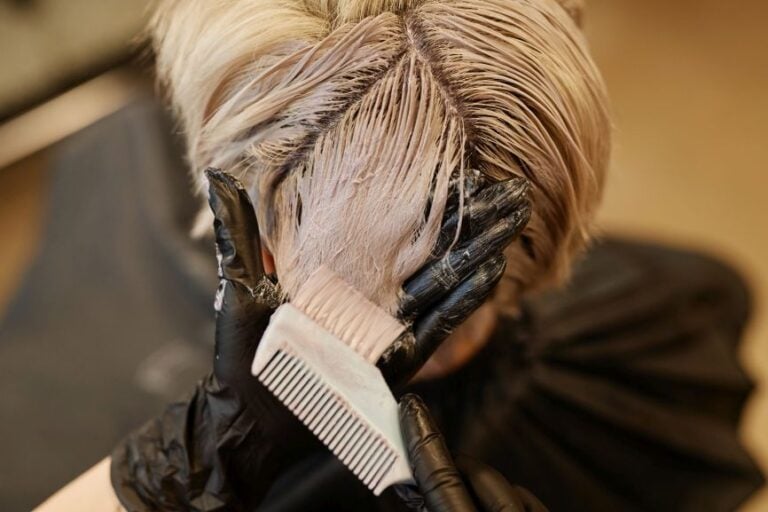
- Micro-sections in resistant zones (temples/hairline)
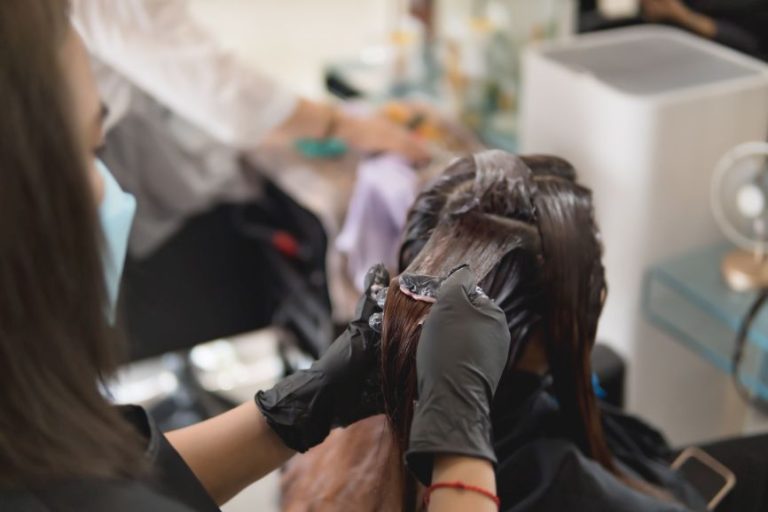
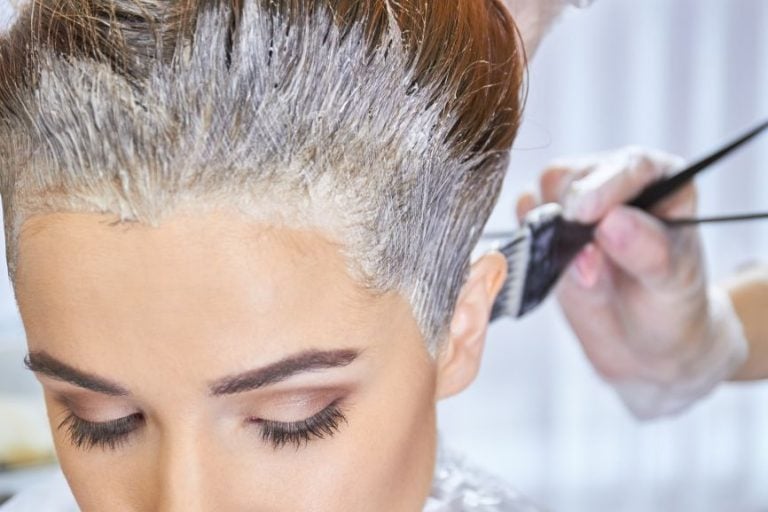
- Heavy saturation-grey coverage is not a “thin paint” service
- Full processing time per manufacturer guidance (don’t cheat the clock)
Pro tip that prevents banding:
On retouches, apply permanent formula root only. Refresh mids/ends with a demi/gloss when needed-don’t keep re-permanenting old color through the lengths. (This single shift eliminates most chronic banding.)
Duomo Pro shade logic for predictable grey coverage
Duomo Pro is designed and created in Italy with a system approach to professional color-built for permanent, demi-permanent, and toning versatility.
When you’re matching regrowth to existing mids/ends, undertone decisions have to be fast and consistent- especially under mixed salon lighting. The Duomo Swatchbook helps you confirm level and reflect before you commit to the formula.
Milano Natural = your coverage backbone

When you need “anchor pigment” that behaves, build your grey coverage frameworks around Milano Natural (your N-series backbone). Start here when you want consistency across multiple clients and multiple stylists in a salon. Try Duomo’s 5.0 / 5N – Milano Natural Natural.
Modica Chocolate = controlled brunette richness (without mud)

When you’re building brunette coverage and the client hates “flat,” Modica Chocolate is a smart place to add controlled reflect-while keeping your Milano Natural anchor doing the heavy lifting. Explore the 4.2 / 4V – Modica Chocolate Violet.
Vesuvius Ash = cool control (used correctly)

Use Vesuvius Ash as a temperature control dial-especially when you’re neutralizing warmth on a level 5–7 root-but keep the anchor in place so you don’t get hollow coverage. Explore the 1.1 / 1A – Vesuvius Ash – Ash.
Firenze Copper + Vatican Red = high-impact tone, anchored for coverage

For clients who want copper/red but still demand coverage, your win is simple:
- Keep Milano Natural as the anchor
- Add Firenze Copper or Vatican Red as the target reflect
Troubleshooting guide (chair-side, fast and honest)
“My grey coverage is patchy-especially at temples.”
Most likely causes:
- Not enough anchor (increase anchor ratio in resistant zones)
- Sections too big / saturation too light
- Product buildup or barrier oils at hairline
Fix:
- Micro-sections + heavier application
- Shift temples to 70/30 anchor/target if needed
“My roots are warmer than the mids.”
Most likely causes:
- Developer too strong at root
- Target reflect too warm for underlying level
- Not enough cool control in addition to anchor
Fix:
- Stay with 20-volume for coverage
- Keep anchor, add a controlled cool reflect (not a full ash takeover)
- Match the undertone of mids/ends-don’t chase the swatchbook fantasy
“I’m getting dark banding on the mids.”
Most likely causes:
- Overlap of permanent color on every retouch
- Porosity grab through old color
Fix:
- Permanent = root-only
- Refresh lengths with demi/gloss
- Emulsify carefully at the bowl to soften transition
“Coverage looks dull or slightly greenish.”
Most likely causes:
- Too much ash without enough base pigment
Fix:
- Increase Natural anchor
- Use ash as control, not as the foundation
Easy six sample frameworks (adaptable, professional logic)
These are “frameworks,” not rigid recipes-adjust for brand level system and client history.
- Level 5–6 neutral brunette coverage
- 50% Milano Natural (level-matched) + 50% desired neutral/reflect
- 20-volume activator
- Resistant 75–100% grey at temples
- 70% Milano Natural + 30% target reflect
- 20-volume activator, micro-sections
- Cool brunette (no hollow result)
- Milano Natural anchor + small portion of Vesuvius Ash for control
- Keep anchor dominant if grey is high
- Copper coverage that still looks expensive
- Milano Natural anchor + Firenze Copper as target
- Root-only retouch; gloss refresh through ends
- Red coverage without “hot root ring”
- Milano Natural anchor + Vatican Red target
- Confirm mids/ends undertone before you pick developer strategy
- Banding-prone client with previous permanent
- Root-only permanent coverage
- Lengths refreshed with demi/gloss (no repeated permanent drag-through)
If you want a predictable system for 100% grey coverage-one that supports controlled tone across natural, brunette depth, ash control, and high-impact reflects-Duomo Pro’s Italian-inspired collections are built for professional consistency. When you’re ready, explore Milano Natural as your coverage backbone and apply for a professional account to access the full system.
FAQs
1) How do I avoid hot roots when coloring grey roots?
Use a strong Natural anchor, stay with 20-volume for coverage, match undertone to mids/ends, and avoid over-lifting the regrowth.
2) What is the best hair color approach for 100% grey coverage?
A Natural-base framework (N/NN logic) + correct developer + full saturation + proper processing time. Formula alone won’t save weak technique.
3) What does “100% grey coverage” mean?
No translucent whites in resistant zones, even deposit at regrowth, and a root result that blends seamlessly into mids/ends-without banding.
4) Is N or NN better for grey coverage?
NN-style logic (stronger base) is better for high-percentage or resistant grey. N is often enough for moderate grey when technique is strong.
5) Why won’t my client’s grey take color at the hairline?
Common reasons: compact cuticle/resistance, product barrier, under-saturation, or insufficient Natural anchor. Fix with micro-sections and a stronger anchor ratio.
6) Why does my retouch keep getting darker through the mids?
Repeated overlap of permanent color + porosity grab. Switch to root-only permanent and refresh lengths with demi/gloss.
7) Should I pull permanent color through every time for coverage?
No. That’s how banding starts. Root-only permanent is the professional move for long-term consistency.
Sources & Further Reading
- Mechanisms of impairment in hair/scalp induced by permanent dyeing (oxidative + alkaline agents; cuticle swelling; diffusion into cortex)
https://pmc.ncbi.nlm.nih.gov/articles/PMC10232955/ - Types of Hair Dye and Their Mechanisms of Action (cuticle/cortex structures; how different dye types work)
https://www.mdpi.com/2079-9284/2/2/110 - Clinical evaluation paper summarizing standard permanent dye chemistry (6–9% peroxide; alkalizing agent; penetration into cuticle/cortex)
https://pmc.ncbi.nlm.nih.gov/articles/PMC9796119/ - Beauty-school exam reference reinforcing “20 volume” as the standard peroxide volume for most permanent haircolor results (useful as training/industry baseline support) https://www.pib.edu/test/2013final.pdf