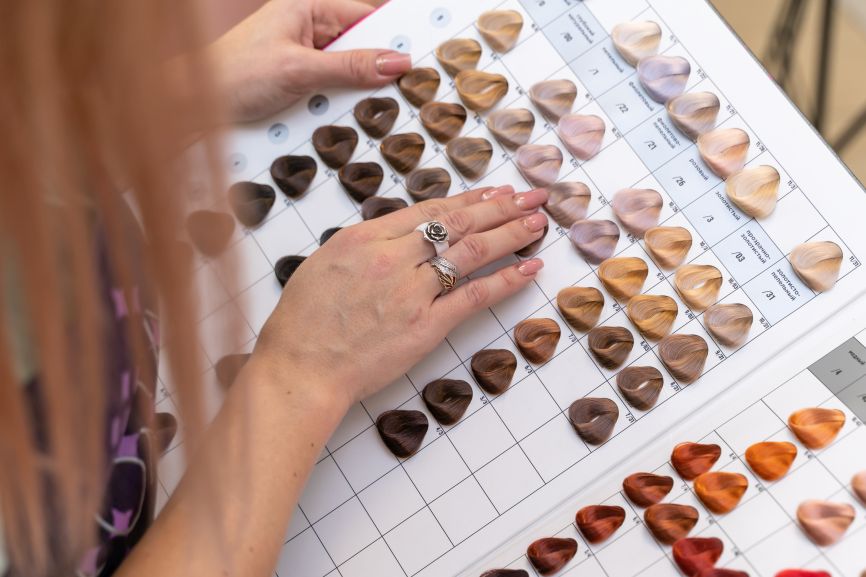
For professional colorists and salon owners, few things are more frustrating than a brunette client returning with orange or copper tones just weeks after a colour appointment. The shade looked balanced when they left, but the unwanted warmth has returned. A reliable brassy brunette fix starts with identifying the exposed underlying pigment, correcting the formulation, and addressing the factors that cause premature fading. At Duomo Pro, our Italian-made professional colour collections give stylists neutral, ash, and violet options to help create balanced brunette results.
Why Brunette Hair Goes Brassy: The Real Cause
Brunette hair typically becomes brassy when deposited cool or neutral pigments fade, making underlying warm tones more visible. Previously lightened brown hair is particularly susceptible because lightening exposes red, orange, and gold pigments that remain visible beneath the finished colour.
At levels 4–6, exposed underlying pigment generally ranges from red-orange to orange-yellow. At levels 7–8, yellow-orange and yellow become more prominent.
When a cool brunette formula fades, its ability to visually balance those warm tones decreases. The result is a shade that gradually looks warmer than it did immediately after the salon appointment.
Several factors influence how quickly this happens:
- Frequent washing: Repeated washing gradually removes some artificial colour molecules.
- Heat styling: Frequent high-temperature styling can contribute to hair damage and colour changes.
- UV exposure: Sunlight can degrade natural and artificial pigments and affect hair-fibre condition.
- High porosity: Previously lightened or damaged areas may lose colour unevenly.
- Mineral buildup: Deposits from certain water sources can affect the hair’s appearance and complicate tonal correction.
However, not every warm brunette result is caused by fading. Sometimes the formula was too warm initially, the hair was lifted to an unsuitable level, or different sections received uneven colour.
This makes accurate diagnosis essential.
For a detailed explanation of the warm pigments exposed at each depth, refer to Duomo’s underlying pigment map.
The Three Formulation Mistakes That Make Brassiness Worse
1. Choosing a Base Shade That’s Too Warm for the Client’s Level
One common mistake is selecting a brunette formula with too much gold, copper, or red reflect for hair that already contains substantial underlying warmth.
For example, previously lightened level 5 hair may expose orange pigment. Adding a strongly golden formula can intensify the visible warmth rather than balance it.
The fix: Start with the client’s current level and identify the dominant unwanted undertone.
A neutral formula may be appropriate when the goal is a natural brunette without excessive coolness. When significant orange is visible, an ash or blue-supported correction may be required.
Duomo’s Milano Natural collection includes neutral and natural-ash options that can help colorists build a controlled brunette foundation.
Avoid assuming that every brunette client needs a heavily ash-based result. Excessive neutralisation can leave the colour looking flat or muddy.
2. Using Insufficient Corrective Pigment
A formula may have the correct depth but lack enough appropriate corrective pigment to balance the exposed warmth.
For instance, a level 6 brunette with noticeable orange-yellow undertones may need more than a lightly neutral shade to achieve a cool finish.
However, adding more pigment indiscriminately can create another problem.
Highly porous hair may absorb certain dyes unevenly, resulting in darker or duller sections. Resistant hair can also respond differently from previously lightened lengths.
The fix: Adjust the corrective tone according to the intensity of the warmth, hair porosity, previous colour history, and desired finish.
Always follow the product manufacturer’s formulation and processing instructions rather than assuming a stronger developer or longer processing time will improve pigment retention.
3. Skipping Toner or Gloss Maintenance
Even a well-formulated brunette may gradually become warmer between appointments.
If a client consistently notices brassiness before their next full colour appointment, waiting until regrowth requires treatment may leave them dissatisfied with the colour for several weeks.
The fix: Consider a professional toner or gloss refresh between full colour services.
For clients experiencing noticeable fading, an appointment around four to six weeks may be appropriate. However, this interval should reflect the individual’s hair condition, colour history, washing routine, and rate of fading.
A carefully selected deposit-focused service can restore tonal balance without necessarily repeating a full permanent colour application.
How to Diagnose Which Type of Brassiness You’re Dealing With
Before choosing a correction, determine the current colour level and the dominant unwanted tone.
Understanding hair color levels 1–10 makes it easier to distinguish between orange, yellow-orange, and yellow warmth.
| Brassiness type | Likely cause | Corrective direction |
| Orange at levels 5–6 | Exposed orange pigment or fading cool deposit | Blue-based ash |
| Yellow-orange at level 7 | Mixed orange and yellow undertones | Blue-violet |
| Yellow at level 8 | Exposed yellow pigment | Violet |
| Warm roots, cooler lengths | Uneven lift, formula differences, or root processing | Separate root assessment |
| Rapid fading on mids and ends | Porosity, damage, or inadequate tonal retention | Assess porosity and use appropriate deposit-focused correction |
Orange Brassiness at Levels 5–6
Orange is commonly visible when darker hair has been lightened or when deposited cool brunette colour fades.
Blue is the complementary colour to orange, making blue-supported ash formulations particularly relevant.
If the unwanted reflect is predominantly red-orange rather than pure orange, the formula may require a different balance of corrective tones.
Gold or Yellow-Orange at Levels 7–8
Lighter brunette shades can reveal yellow-orange or yellow warmth.
A blue-violet combination is useful when both orange and yellow are present. Violet becomes more relevant as the visible warmth shifts towards yellow.
The correction should follow the actual undertone rather than relying on level alone.
Warm Roots With Cooler Lengths
Warm roots can develop when natural regrowth lifts differently from previously coloured hair.
Scalp heat, natural pigment, developer selection, processing conditions, and previous colour overlap may all influence the result.
Examine the root area separately before reformulating.
Warmth Returning Within Two Weeks
Rapid tonal changes deserve closer investigation.
Check the hair’s porosity, chemical history, washing products, mineral exposure, and styling habits.
A formula adjustment alone may not solve the problem if damaged or highly porous hair is losing colour unevenly.
The Formulation Fix for Each Brassiness Type
Orange at Levels 5–6: Use Blue-Based Neutralisation
When a brunette displays strong orange undertones, a blue-supported corrective formula is usually the most appropriate starting point.
Duomo’s Vesuvius Ash collection includes professional ash shades suitable for developing cooler colour results. Its Ultra Pure Pigments range also includes blue-ash options for professional colour customisation.
The selected shade and pigment balance must suit the existing level, condition of the hair, and desired finish.
Duomo’s Modica Chocolate collection offers violet-based shades, but violet alone should not be relied on to neutralise strong orange.
It may contribute to a more complex brunette formulation where violet reflect is desirable, provided the complete formula addresses the exposed warmth.
Gold or Yellow-Orange at Levels 7–8: Balance Blue and Violet
For a level 7 brunette displaying yellow-orange warmth, consider a formulation containing appropriate blue-violet correction.
Where the underlying pigment appears predominantly yellow, violet-based neutralisation becomes more suitable.
Vesuvius Ash includes ash and violet-ash shade options, allowing professionals to select the tonal direction that best suits the existing colour.
Take care not to over-neutralise.
A client requesting a natural, dimensional brunette may not want a distinctly cool or smoky result.
Warm Roots: Correct the Application Strategy
When roots appear warmer than the mids and ends, first determine whether the difference comes from natural pigment, lift, developer strength, or processing conditions.
Do not automatically extend processing time or apply more ash.
Instead:
- Assess the natural root level and grey percentage.
- Review the developer and formula used.
- Check whether the root area lifted more than intended.
- Avoid unnecessary overlap onto already balanced lengths.
- Follow the manufacturer’s recommended application and processing instructions.
Where roots and lengths have different corrective needs, separate formulations may be appropriate.
Porosity-Driven Fading: Address Hair Condition
Highly porous hair can produce unpredictable colour retention, particularly after repeated lightening or chemical services.
Before applying another corrective formula, assess the hair’s condition and previous treatments.
If mineral buildup is suspected, a suitable professional chelating treatment may help. Clarifying products should be selected carefully, as excessive cleansing may worsen dryness or contribute to fading.
For compromised hair, prioritise appropriate conditioning and damage-management treatments.
A strand test can also help assess how the hair responds to a proposed colour correction.
Duomo’s natural series includes neutral and natural-ash shades that colorists can consider when rebuilding a balanced brunette formula.
The Maintenance Protocol That Keeps Brunettes Brass-Free Between Appointments
Correct formulation is only part of the solution. Clients also need a realistic maintenance routine.
Schedule Tonal Refreshes When Needed
For brunettes that fade quickly, consider a professional toner or gloss appointment approximately four to six weeks after colouring.
Some clients may need maintenance sooner, while others can maintain their preferred shade until the next full colour service.
Recommend the Right Colour-Correcting Shampoo
Blue-pigmented shampoos can help reduce the appearance of orange tones between salon visits.
Violet shampoos are generally more appropriate for predominantly yellow warmth, while red undertones require a different corrective approach.
These products are maintenance aids, not substitutes for correcting an unsuitable salon formula.
Overusing pigmented shampoos can also leave porous sections looking dull or uneven.
Reduce Unnecessary Heat and Washing Stress
Recommend lukewarm water, suitable colour-care products, and a washing frequency that fits the client’s scalp needs.
Clients who regularly use heated styling tools should apply a heat protectant and avoid unnecessarily high temperatures.
Protect Against UV Exposure
Prolonged sunlight exposure can contribute to pigment degradation and hair-fibre damage.
Clients who spend considerable time outdoors may benefit from hats or hair-care products designed to offer UV protection.
For clients experiencing persistent buildup, investigate water quality before recommending filtration products, as ordinary shower filters do not necessarily remove dissolved hardness minerals.
FAQs
Why Does My Client’s Brunette Hair Always Look Orange After a Few Weeks?
Orange tones commonly become more visible when deposited cool or neutral pigments gradually fade from previously lightened brunette hair. The underlying warm pigments have not necessarily increased; they are simply less effectively masked or balanced. Frequent washing, UV exposure, and high porosity may contribute to the problem. Review the underlying pigment and corrective formulation to identify why the tone is returning.
Can I Fix Brassy Brunette Hair in One Appointment?
Many cases of brassy brunette hair can be corrected during one professional appointment, particularly when the problem is primarily tonal. A suitable toner, gloss, or other colour service may restore a more balanced result. However, uneven lightening, severe porosity differences, or significant colour buildup may require additional corrective steps. Hair condition should always determine the approach.
What Toner Cancels Orange in Brunette Hair?
Blue-based toners are generally used to neutralise orange because blue is opposite orange on the colour wheel. When the visible warmth contains both orange and yellow, a blue-violet combination may be appropriate. Violet alone is better suited to yellow tones. Colorists should assess the current level, unwanted reflect, and desired depth before choosing the corrective formula.
Does Ammonia-Free Colour Go Brassy Faster Than Regular Colour?
Ammonia-free colour does not automatically become brassy faster than ammonia-containing colour. Colour longevity depends on the complete formulation, the alkalising system, developer, processing conditions, hair porosity, and maintenance routine. Ammonia is only one component that can influence oxidative colouring. Duomo’s ammonia-free professional colour system supports permanent, demi-permanent, and toning applications, depending on the selected formulation and developer.
How Often Should a Brunette Client Come In to Maintain Their Colour Tone?
Maintenance depends on how quickly the client’s colour fades and whether the hair has been previously lightened. Some clients may benefit from a gloss or toner refresh around four to six weeks after colouring. Others may maintain their preferred brunette tone until their next regular appointment. Consider porosity, washing frequency, heat styling, and the type of colour service when recommending a schedule.
Keep Brunette Colour Balanced With Better Diagnosis and Formulation
Recurring brunette brassiness should not automatically lead to stronger ash formulas or more frequent permanent colouring.
A successful correction begins with identifying the current level, recognising the exposed warm pigment, and choosing an appropriate complementary tone.
From there, controlled formulation, careful application, and a personalised maintenance routine can help preserve the intended brunette result for longer.
Duomo Pro’s Italian-made professional colour collections provide stylists with neutral, ash, violet, and customisation options to support this approach.
For the complete breakdown of underlying pigments across every level, and how to interpret them before formulating for brunette clients, explore Duomo’s underlying pigment map.