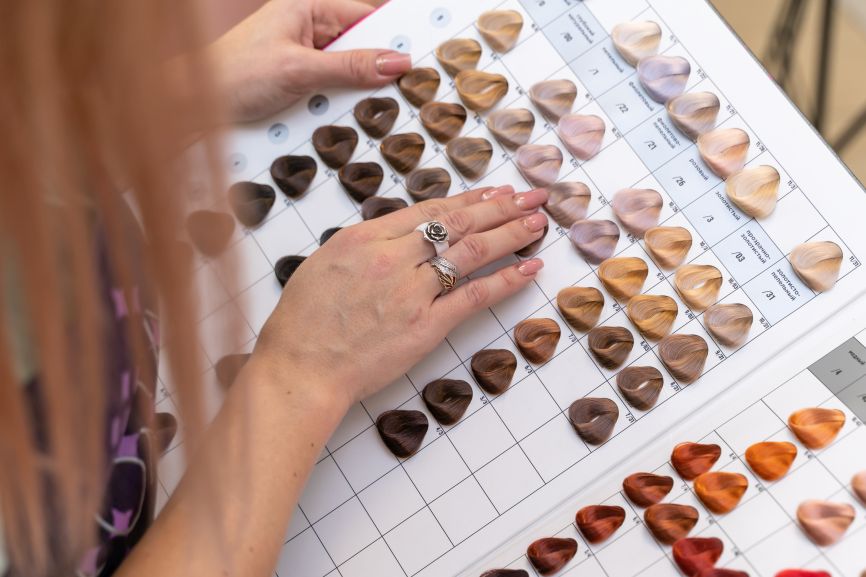
For salon owners and lead colorists evaluating Italian hair color brands, the challenge is separating meaningful formulation differences from persuasive branding. You need dependable grey coverage, predictable tonal results, comfortable processing, and a shade system your team can use without constant correction. Duomo Pro supports that evaluation with an Italian-created professional color system built around ammonia-free chemistry, integrated conditioning ingredients, and salon-exclusive distribution.
Italian hair color brands differ primarily because they are developed within the EU cosmetics regulatory environment and often follow a formulation philosophy that integrates alkalinity, pigment delivery, and conditioning into one professional system. For salon owners and lead colorists, the real test is not the “Made in Italy” label but whether those differences produce predictable coverage, tonal control, comfortable processing, and better post-service hair condition.
Why Italian Hair Color Brands Have a Distinct Reputation in Professional Salons
Italian professional color is known for more than packaging or an association with fashion. Its reputation comes from a long-established professional hair industry, EU cosmetic requirements, and a formulation approach that often treats hair condition as part of the color service rather than a separate concern.
Hair dyes sold in the European Union are regulated as cosmetics under Regulation (EC) No 1223/2009. The regulation establishes requirements covering product safety assessments, ingredient restrictions, manufacturing documentation, labeling, market notification, and post-market responsibilities. Hair dye substances may also be prohibited, restricted to defined concentrations, or subject to warning-label requirements through the regulation’s annexes.
That does not mean every Italian formula is ammonia-free, highly conditioning, or automatically preferable to a US line. It means products manufactured for the EU market are developed within a prescriptive regulatory structure that affects how ingredients are selected, assessed, documented, and disclosed.
Major US professional lines can also be technically advanced, and products sold in both markets must satisfy the applicable requirements in each one. The useful question is therefore not simply, “Was this made in Italy?” It is:
How has the manufacturer translated its regulatory environment and formulation philosophy into practical salon performance?
For a colorist, that performance should be visible in measurable areas such as scalp comfort, tonal consistency, grey coverage, fade pattern, hair condition, and the repeatability of formulas across returning appointments.
What Do EU Cosmetic Regulations Mean for Hair Color Chemistry?
EU Cosmetics Regulation EC No 1223/2009 uses annexes to identify prohibited substances, restricted substances, approved colorants, permitted preservatives, and permitted ultraviolet filters. Hair dye ingredients can have maximum concentrations, conditions of use, purity expectations, and mandatory warnings attached to them. The European Commission continues to amend these requirements as substances are reassessed.
The US regulatory structure is different. The FDA regulates cosmetics under US law, but most coal-tar hair dyes have a specific statutory treatment that differs from the premarket approval system used for many other color additives. This does not make US professional color inherently unsafe or inferior. It means direct comparisons should address the actual regulatory mechanisms rather than claiming that one market simply “allows chemicals” while another does not.
For colorists, EU compliance has several practical implications:
- A manufacturer must assess the safety of the complete cosmetic product, not only individual headline ingredients.
- Restricted oxidative dye substances must remain within specified conditions and concentrations.
- Product information, safety documentation, labeling, and traceability must be maintained.
- Formulas may need to be revised when scientific assessments lead to new restrictions.
Regulation alone does not guarantee comfortable processing or beautiful results. Those outcomes depend on the finished formulation. However, the EU framework encourages manufacturers to consider alkalizing agents, oxidative dyes, preservatives, conditioning materials, exposure levels, and warning requirements as an integrated system.
When evaluating a color line, ask for more than an “EU compliant” statement. Request the full ingredient declaration, mixing instructions, processing parameters, safety documentation, and education explaining how the chemistry behaves in real salon services.
Italian-Formulated Hair Color vs American Brands: What Are the Real Differences?
There is no universal chemical rule separating every Italian-formulated hair color from every American brand. Some American lines are produced in Europe, and some Italian companies develop different formulas for different markets. The differences salon professionals notice usually come from formulation philosophy rather than nationality alone.
Approach to alkalinity
Permanent oxidative color requires an alkaline environment to swell the cuticle and support dye development. Traditional systems commonly use ammonia, while ammonia-free systems use alternative alkalizing agents.
Neither choice automatically determines performance. An ammonia-free formula still needs sufficient alkalinity, an appropriate developer, and enough processing time to deliver lift or deposit. The important questions are how the system controls pH, how consistently it opens the cuticle, and whether it can produce reliable results without unnecessary discomfort.
Italian professional portfolios often include ammonia-free options, but this is a brand-level decision rather than an EU requirement. Davines, Alter Ego Italy, and Duomo, for example, each offer ammonia-free professional color systems.
Conditioning within the color formula
Many Italian systems emphasize conditioning ingredients within the color cream itself. Depending on the brand, these may include plant proteins, hyaluronic acid, oils, botanical extracts, film-forming agents, or other conditioning materials.
This does not mean color reverses existing damage. Oxidative coloring is still a chemical service. Integrated conditioning ingredients may, however, improve lubrication, manageability, softness, and the way the hair feels after rinsing.
Salon owners should judge this through controlled testing rather than ingredient marketing. Compare equal starting canvases, use the manufacturer’s matched activator, and assess combability, porosity, shine, elasticity, and feel after several shampoos.
Pigment performance
Claims that all Italian formulas contain more pigment than US formulas are too broad to be reliable. Pigment load, dye selection, coupling chemistry, alkalinity, mixing ratio, developer strength, and processing time vary by product.
What matters behind the chair is whether the line provides:
- Even saturation from roots to ends
- Predictable neutralization
- Reliable depth at the intended level
- Consistent results across natural and fashion families
- Controlled fading between appointments
High pigment concentration is not automatically an advantage. An overly dense formula can create grabbing on porous hair or make future color changes more difficult. The goal is controlled, repeatable pigment delivery.
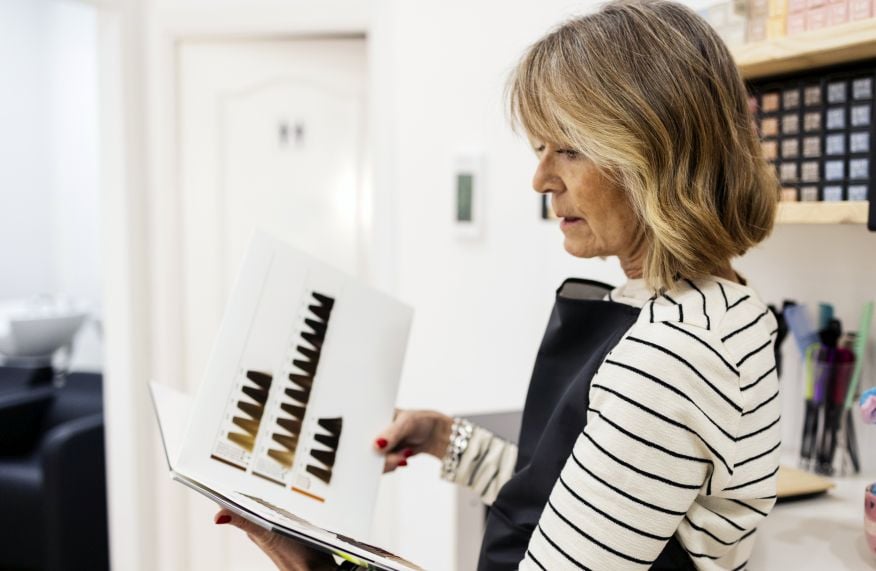
Shade range architecture
Italian brands are often associated with strong natural, brunette, copper, red, gold, and ash families. However, salon owners should avoid selecting a line based solely on an appealing shade chart.
Look at how the naturals are balanced, which tonal families are available at each level, how the brand organizes reflects, and whether the highlift and specialty shades support your actual service menu. A technically coherent range is more valuable than a large collection with gaps in the shades your salon uses every week.
What Should You Look for in an Italian Professional Hair Color Brand?
The phrase “Made in Italy” can identify a product’s origin, but it does not tell you whether the system is suitable for a full-service color department. Use the following criteria to evaluate any Italian hair color brand before changing inventory.
1. Complete ingredient transparency
A professional company should provide full INCI ingredient lists and explain which ingredients perform technical functions. Be cautious when education focuses heavily on one botanical extract while saying little about the alkalizer, oxidative dyes, developer, or mixing system.
Ingredient transparency also helps salons evaluate sensitivities and follow appropriate patch-testing protocols. “Clean,” “gentle,” and “natural” are not substitutes for a complete ingredient declaration or proper safety procedures.
2. A clear explanation of the alkalizing system
Determine whether the product is ammonia-free, low-ammonia, or ammonia-containing. Then ask how the formula achieves cuticle swelling and dye development.
Ammonia-free does not mean non-alkaline, non-oxidative, or risk-free. It also does not guarantee that a line will cover every resistant grey pattern without formula adjustments. The manufacturer should provide specific guidance for natural percentage, developer choice, mixing ratio, processing time, and resistant areas.
For more detailed formulation guidance, review Duomo’s grey coverage formulas.
3. Enough shade depth for full salon use
A credible salon line needs more than a few fashionable shades. Look for:
- A complete natural series
- Cool and warm natural options
- Ash, gold, copper, red, violet, and brunette families
- Highlift shades
- Toners or demi-permanent options
- Correctors or intensifiers
- Clear grey coverage recommendations
The shade chart should support blonding, dimensional brunette work, reds, coppers, corrective services, toning, and recurring root maintenance.
4. A matched developer system
Color and activator should be engineered to work together. A matched system helps control final pH, viscosity, lift, deposit, and oxidative dye development.
Using an unrelated developer may appear economical, but it introduces variables into every formula. Those variables become particularly costly when resistant-grey clients return every four to six weeks and expect their result to match the previous appointment.
5. Professional education and testing support
A salon should not have to learn a new system through trial and error on paying clients. Ask whether the company offers conversion charts, swatches, model testing, mixing guidance, grey coverage education, corrective protocols, and technical support.
Education is especially important when moving from a traditional permanent line to a versatile system capable of permanent color, demi-permanent results, or toning through different activators and mixing methods.
6. Genuine professional distribution
Determine whether the products are sold only through verified salon accounts or are widely available to unlicensed consumers. Professional exclusivity helps protect service value, limits consumer misuse, and gives salons a stronger point of differentiation.
It should not be treated as proof of formulation quality on its own. However, combined with education, technical support, and controlled distribution, it indicates that the system was built around professional application.
Salon owners comparing different professional hair color brands should evaluate the complete operating system, not just cost per tube.
Which Italian Professional Hair Color Brands Are Used in Salons?
Several Italian brands have established professional color portfolios in the US and international salon markets. Their systems differ, so inclusion in the same category should not imply that their formulas are interchangeable.
- Duomo Pro:A professional color system designed and created in Italy built around an ammonia-free, fragrance-free, vegan, and cruelty-free three-in-one color system.
- Framesi: An Italian professional company founded in Milan that offers salon-exclusive color, care, treatment, and styling products.
- Alfaparf Milano Professional: A professional haircare and color brand with permanent color, demi-permanent color, toners, pigments, lighteners, and matched oxidizing products.
- Davines: A Parma-based professional brand offering haircare and color systems, including ammonia-free permanent and demi-permanent options.
- Alter Ego Italy: A made-in-Italy professional portfolio covering permanent color, ammonia-free color, lighteners, activators, treatments, and styling products.
Duomo’s formula contains phytokeratin, aloe vera, and rosehip flower extract. The formula includes phytokeratin, aloe vera, and rosehip flower extract as part of its conditioning-focused formulatio, while aloe vera and rosehip extract contribute to the formula’s conditioning . Aloe vera and rosehip flower extract support the formula’s conditioning profile and gentle-service positioning.
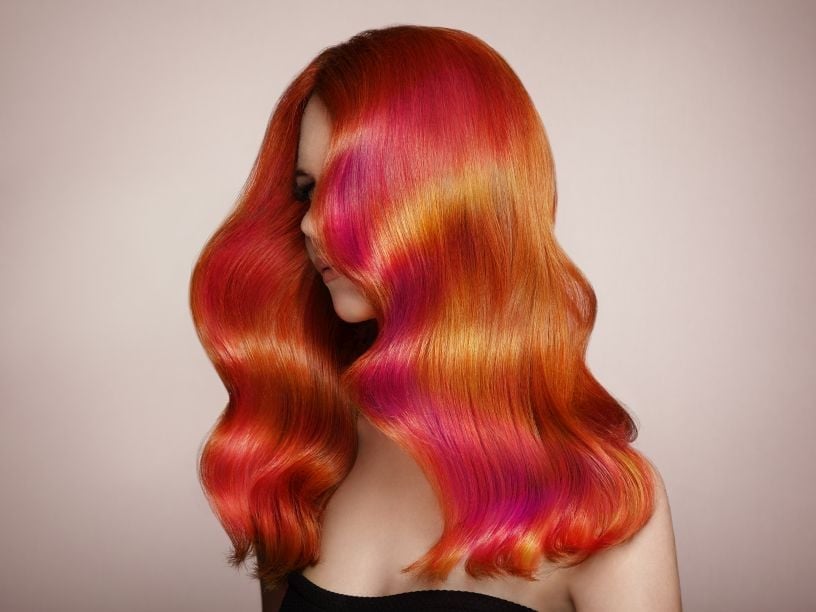
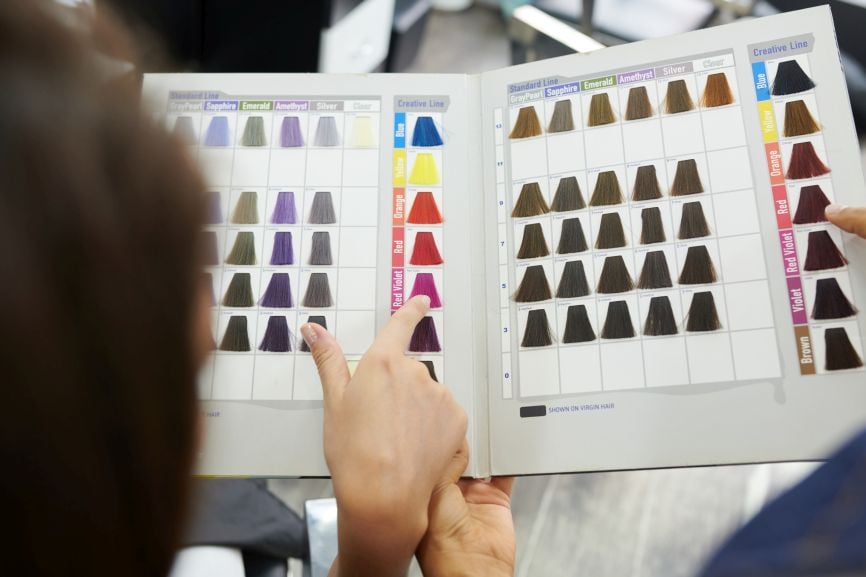
The range includes Milano Natural, Firenze Copper, Vatican Red, Vesuvius Ash, San Marco Gold, Modica Chocolate, Cavalla Highlift, and Vivids. This provides salons with natural foundations, tonal families, highlift options, and creative shades rather than limiting the system to a small boutique palette.
The formula can be used for permanent, demi-permanent, and toning services according to the prescribed mixing system. That versatility can help salons reduce overlapping inventory, although teams should still test every service category before replacing an established line.
Explore Duomo’s professional color line to review its collections and salon applications.
Why Are Salon Owners Switching to Italian Color Lines?
A salon rarely changes color lines because of one ingredient. Switching affects inventory, staff education, formulation records, client expectations, service timing, and profitability. Owners usually make the change when several technical and business advantages align.
Clients are asking for different color experiences
Some clients dislike strong ammonia odor, report discomfort during processing, or actively request vegan and cruelty-free options. An ammonia-free line cannot promise that no client will experience sensitivity, but it can remove ammonia from the service and create a more comfortable salon environment for clients who object to its odor.
Patch testing and manufacturer safety directions remain necessary regardless of whether the line is described as ammonia-free, PPD-free, vegan, or conditioning.
The color line becomes part of the salon’s positioning
When nearby salons use many of the same broadly distributed products, a professional Italian line can support a more distinctive consultation story. The salon can explain where the formula is created, how its system works, why particular ingredients were selected, and why access is limited to professionals.
That story only helps when the technical results support it. Country of origin may attract initial interest, but repeatable color and a positive client experience create retention.
Predictable grey coverage reduces costly corrections
Grey clients often return on dependable maintenance cycles, making them commercially valuable to a salon. Inconsistent coverage can lead to complimentary corrections, longer appointments, and reduced trust.
A well-documented system gives colorists repeatable guidance for natural-series proportion, resistant areas, developer strength, saturation, and processing time. Consistency matters more than dramatic claims of universal coverage.
Clients notice post-service hair condition
Clients may not understand oxidative dye chemistry, but they notice whether their hair feels rough, tangled, coated, or manageable after rinsing. Better tactile condition can strengthen their perception of the service and make aftercare recommendations easier to understand.
Salon owners should assess this over multiple appointments. Immediate softness is useful, but long-term fade, porosity, breakage, and the condition of overlapping mids and ends provide a more complete picture.
A versatile system can simplify inventory
Some Italian lines allow colorists to produce multiple service types from one color portfolio by changing the activator, mixing ratio, or application method. Duomo’s system, for example, is designed for permanent, demi-permanent, and toning applications.
This can reduce duplicate shade inventories and improve stock control. Before switching, salons should calculate cost per mixed ounce, average product usage, minimum stock requirements, developer needs, and the education time required for the team.
Salons interested in testing Duomo can apply for a professional salon account and evaluate the system within their own service environment.
Frequently Asked Questions About Italian Hair Color Brands
Is Italian hair color actually better than American professional brands?
Italian hair color is not automatically better simply because it is Italian. Major American professional brands can offer excellent grey coverage, lift, toning, conditioning, and technical education. The meaningful differences are found in the individual formula, alkalizing system, shade architecture, developer compatibility, ingredient transparency, and salon support.
What makes Italian hair color formulations different from a chemistry standpoint?
Many Italian professional lines emphasize integrated conditioning ingredients, ammonia-free or alternative alkalizing systems, versatile color formats, and shade families built for broad salon use. Products developed for the EU market must also comply with Regulation EC No 1223/2009, including its safety assessment, documentation, labeling, and ingredient restriction requirements. These factors influence formulation decisions, but salons must still assess each brand individually.
Are Italian professional hair color brands available in the US?
Yes. Italian professional brands including Framesi, Alfaparf Milano Professional, Davines, Alter Ego Italy, and Duomo Pro are represented in the US market. Availability differs by company: some use distributors, some work through professional stores, and others require a verified salon account. Check whether education, activators, replacement stock, and technical assistance are consistently available in your region before committing.
Can Italian ammonia-free color cover resistant grey hair effectively?
Yes, an ammonia-free professional system can cover resistant grey when it provides enough alkalinity, appropriate oxidative dyes, complete saturation, a compatible developer, and sufficient processing time. Ammonia-free does not mean alkaline-free. Reliable coverage depends on the complete formulation and technique, including the proportion of natural shades and any resistant-grey adjustments recommended by the manufacturer.
How do I know whether an Italian color brand is genuinely professional quality?
Look for complete ingredient lists, a broad and logically organized shade range, matched developers, detailed technical instructions, professional education, controlled distribution, and repeatable results in strand and model testing. The manufacturer should explain how its permanent color, toners, highlifts, fashion shades, and grey formulas work rather than relying on origin claims. Professional quality should be demonstrable through performance and support.
Evaluate Italian Hair Color Through Performance, Not Origin Alone
Italian manufacturing can provide a meaningful foundation, but “Italian” should begin the evaluation rather than end it. The right line is the one that gives your team predictable chemistry, a complete shade system, dependable education, manageable inventory, and results clients want to maintain.
For salons wanting to see how Italian professional color performs specifically on grey coverage, explore Duomo’s professional grey coverage formula framework. Salons ready to carry Duomo can apply for a professional salon account directly.