Professional colorists dealing with grey coverage know how frustrating it is to finish a technically sound service and still see a lighter root ring, dark mid-length band, or patchy deposit under salon lighting. These inconsistencies can make a client question the entire result, even when most of the coverage is correct. Duomo Pro supports stylists with an Italian-made, ammonia-free professional color system designed for controlled deposit, but preventing banding still depends on diagnosing each zone and adjusting the formulation, developer, saturation, and timing accordingly.
The fastest way to fix color banding in hair is to identify whether the affected area is too light, too dark, too warm, or simply uneven. Correct only that zone rather than covering the entire head again. Once the visible band is corrected, review the original application to determine whether the cause was developer strength, repeated overlap, porosity, timing, or insufficient saturation.
What Is Color Banding and Why Does It Happen on Grey Hair Specifically?
Color banding is a visible horizontal stripe or line of color variation that appears when different sections of the hair process at different rates or receive different levels of pigment deposit during the same service.
During grey coverage, the colorist may be working with three very different canvases on one head:
- Resistant grey or white new growth
- Partially pigmented natural hair within the root zone
- Previously colored mid-lengths and ends
Each zone can have a different porosity level, pigment history, and response to developer. Resistant grey may absorb color slowly because of its compact, less receptive surface. Previously colored lengths may be more porous and absorb pigment almost immediately.
That contrast is why grey coverage services are particularly vulnerable to banding. A formula strong enough to access resistant roots may be too aggressive or too deposit-heavy for the lengths. Likewise, a deposit-focused formula that refreshes porous ends may not deliver sufficient opacity at the new growth.
Any inconsistency in application, product saturation, timing, developer selection, or formula placement can make the transition between those zones visible. The goal is not to force the whole head to process identically. It is to treat each zone according to what it actually needs.
The Four Most Common Causes of Banding During Grey Coverage
1. Inconsistent Application Timing
Grey coverage timing should reflect when each section received the formula, not simply when the colorist began the service.
Consider a client with dense hair and resistant grey at the temples. The colorist applies the crown first, spends 20 minutes moving through the rest of the head, and applies the temples last. Even when everything is rinsed at the same time, the resistant area has received significantly less processing time.
The same problem can happen when one side of the head is completed much earlier than the other. Grey roots already process differently from previously colored hair, so large timing gaps create another variable that can produce uneven deposit.
Apply the most resistant areas first and maintain a consistent application pace. Every resistant section must receive the full manufacturer-recommended processing time.
2. Using the Wrong Developer Volume on the Lengths
A permanent root formula and its developer are selected to access resistant new growth. That does not mean the same combination belongs on previously colored hair.
Pulling a 20-volume permanent formula through porous mid-lengths and ends can cause unnecessary oxidation, repeated pigment buildup, dryness, and over-deposit. Over several retouches, the overlap area may become progressively darker and appear as a permanent horizontal band.
Previously colored lengths usually require a deposit-focused refresh rather than another full permanent application. Review the complete guide to selecting developer volume for grey coverage before deciding which activator belongs on each zone.
3. Uneven Product Saturation
Resistant grey coverage requires more than touching color onto the surface. Every strand must be surrounded by enough product to develop evenly.
Sections that are too thick, a brush that is carrying too little formula, or a rushed application around the hairline can leave isolated strands under-pigmented. The result may look patchy rather than forming one perfectly clean horizontal line, but it is still an uneven coverage problem.
This is particularly visible around temples, hairlines, whorls, and areas where coarse white strands grow in different directions. Thin subsections and deliberate saturation are essential. Grey coverage is not the place for a light, balayage-style product load.
4. A Porosity Mismatch Between Roots and Lengths
Resistant grey new growth may be slow to accept artificial pigment, while previously colored lengths may grab the same pigment instantly. Applying one formula from scalp to ends ignores that fundamental difference.
The root may remain slightly translucent while the mid-lengths become deeper or cooler than intended. If the permanent formula overlaps the same area at every retouch, the band becomes darker and more difficult to correct.
This is why the root and length formulas should be treated as separate technical decisions. The root formula must create reliable coverage. The length formula should replace only the tone that has actually faded, without adding unnecessary depth to areas that are already saturated.
How to Diagnose Which Type of Banding You Are Dealing With
Before deciding how to fix hair color banding, examine the result in neutral lighting and separate the hair into clean sections. Do not rely only on the overall impression from the mirror. The location, depth, temperature, and shape of the band reveal what likely caused it.
A Lighter Band at the Root Zone
A lighter or more translucent root band usually indicates insufficient deposit on resistant grey.
Possible causes include:
- Incomplete saturation
- Sections that were too thick
- Insufficient processing time
- Too little natural or base pigment in the formula
- A developer or formula that did not provide adequate access and deposit
Check whether the band appears everywhere or mainly around the temples and hairline. Localized failure usually points to resistance or application. An even root ring across the entire head is more likely to involve formula, timing, or developer selection.
A Darker Band Through the Mid-Lengths
A darker mid-length band usually signals pigment buildup on previously colored hair. It is frequently found immediately below the newest regrowth, where permanent color has overlapped during repeated root services.
Porous hair accepts pigment quickly, and permanent color does not reliably lighten previously deposited artificial pigment. Repeated overlap therefore creates a deeper, denser zone rather than refreshing the existing shade.
A Warm or Brassy Band
A warm band indicates that underlying pigment has been exposed without enough tonal control or base support.
This can happen when the developer is stronger than necessary, the natural pigmented portion of the root lifts faster than the grey deposits, or the chosen shade lacks the correct neutralizing reflect. Warmth concentrated close to the scalp may also indicate hot roots.
An Uneven, Patchy Result
Patchy coverage is usually an application problem rather than one single formulation failure.
Look for repeated patterns. Missed strands, translucent pockets, and irregular areas around the hairline suggest inconsistent sectioning or saturation. A formulation issue is more likely to create a predictable result across an entire zone.
How to Fix Banding That Has Already Happened
The correction should be based on what the affected band needs, not what the rest of the hair received during the original service.
Step 1: Assess the Band Before Applying More Color
Confirm:
- Whether the band is lighter or darker than the target
- Whether it is warm, cool, neutral, or muddy
- Whether it contains artificial pigment
- Whether the hair is resistant, porous, or compromised
- Whether the problem is a clean band or irregular missed coverage
Review the client’s formula history and perform strand testing when artificial pigment may need to be removed. Do not assume that a visibly lighter-looking band is always missing depth. Excess warmth can sometimes create the impression of brightness even when the level is correct.
Step 2: Correct a Lighter Root Band
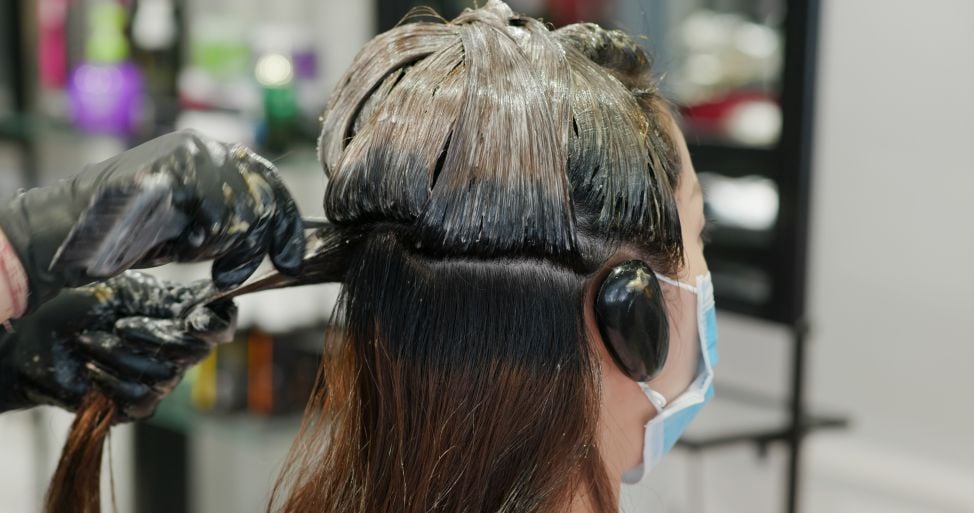
For an under-deposited root zone, reapply an appropriate coverage formula only to the affected area.
Use thin subsections, complete saturation, and the full required processing time. If resistant grey caused the failure, adjust the natural-base contribution or resistant-zone strategy rather than automatically increasing developer strength.
Avoid overlapping the correction onto properly colored mid-lengths. Correcting two centimetres of resistant regrowth should not become another full-head permanent service.
Step 3: Correct a Dark Mid-Length Band
A demi-permanent formula cannot lift a dark band created by artificial pigment. Adding a “lighter” shade over it may adjust the tone, but it will not reliably remove the excess depth.
When the band is genuinely darker than the target, the professional correction may require controlled pigment reduction or selective lightening, depending on the color history and condition of the hair. Isolate the affected zone, strand-test the correction method, and protect the lighter areas above and below it.
Once the excess depth has been reduced to the correct level, refine the zone with a deposit-only formula, gloss, or toner that matches the surrounding hair. The exact correction must be based on the pigments exposed during removal.
Step 4: Correct a Warm Band
Use a targeted toner or deposit formula containing the appropriate neutralizing reflect for the warmth present.
Do not select toner based on the shade name alone. Identify whether the band is red, red-orange, orange, gold, or yellow, then choose the complementary tonal direction at the correct level.
Keep the application restricted to the warm zone. Applying a strong neutralizer over areas that are already balanced can create dull, overly cool, or hollow-looking lengths.
When root warmth appears alongside uneven grey coverage, use the hot roots diagnostic process before attempting a correction.
Step 5: Do Not Cover the Entire Head Automatically
Applying one full-head formula over visible banding without diagnosing the cause usually compounds the problem.
A darker band can become darker. Porous ends can grab excess tone. Resistant roots may still remain translucent. The client then leaves with more artificial pigment and less room for a controlled correction.
Treat the problem zone first. Blend only as far as necessary to create a seamless transition.
How to Prevent Banding on Every Grey Coverage Service
Use Separate Formulas for Roots and Lengths
Apply permanent grey coverage color only to the new growth unless the lengths have a specific technical reason to receive permanent color.
Refresh previously colored mid-lengths and ends with a compatible demi-permanent formula, glaze, or deposit-focused service when needed. In many appointments, the lengths may need conditioning and shine rather than additional pigment.
Begin With the Most Resistant Grey
Map the client’s resistance before mixing the formula. Common trouble zones include the temples, front hairline, crown, and areas exposed to skincare products or frequent washing.
Apply to those zones first. Use thin, controlled sections and maintain consistent product saturation from the first section to the last.
Track Timing by Zone
Processing time begins when the formula reaches the hair.
For dense clients or complex application patterns, record when each major section was completed. This prevents the first section from overprocessing while the final resistant area receives insufficient time.
Pre-Soften Only When the Diagnosis Supports It
Some coarse, compact grey may benefit from pre-softening, but it should not become an automatic step for every client. First confirm that the coverage failure persists despite correct formula anchoring, saturation, sectioning, and processing time.
The guide to resistant grey hair explains when pre-softening is appropriate and which application changes should be attempted first.
Match Developer Strength to Each Zone
Developer should be selected for the hair being treated, not for the head as a whole.
Resistant grey roots may require the controlled access provided by a permanent coverage system, while porous lengths need minimal lift and controlled deposit. Stronger developer is not a shortcut for better coverage, and it should never be expected to correct weak saturation or insufficient base pigment.
Keep Detailed Formula and Placement Records
Record more than the shade and mixing ratio. Note:
- Grey percentage
- Resistant areas
- Root and length formulas
- Developer used in each zone
- Application order
- Processing time
- Porosity through the lengths
- Any overlap or corrective work
These details allow the next service to reproduce what worked and adjust what did not. Banding often becomes chronic because the same placement mistake is repeated at every appointment.
FAQs About Color Banding and Uneven Grey Coverage
Can banding be fixed in one appointment, or does it take multiple sessions?
Minor under-deposit, warmth, or application inconsistency can often be corrected in one appointment. A dark band containing several layers of permanent artificial pigment may require more than one controlled correction, especially if the hair is porous or compromised. Preserving the integrity of the hair should take priority over forcing the target result in one session. Strand testing will help determine what is realistically achievable.
Is banding more common with ammonia-free color on grey hair?
Banding is not automatically caused by an ammonia-free color system. It is more commonly connected to porosity differences, repeated permanent overlap, formula placement, inconsistent saturation, or incorrect developer selection. An ammonia-free professional formula still requires the correct activator, natural-base support, processing time, and application technique. Product chemistry cannot compensate for treating resistant roots and porous lengths as the same canvas.
What is the difference between banding and hot roots?
Banding is any visible stripe or zone where the color differs from the surrounding hair. Hot roots specifically describe a root area that appears brighter, warmer, or more intense than the mid-lengths and ends. Hot roots can create one type of banding, but not every band is a hot-root problem. Dark mid-length buildup, patchy grey coverage, and porous-end over-deposit are different forms of uneven color.
Does banding mean the formula was wrong or just the application?
It can be either, and sometimes both. A uniform lighter root band may point to insufficient base pigment, inappropriate developer selection, or incomplete timing. Irregular patches usually indicate sectioning or saturation problems, while a dark mid-length band often indicates repeated overlap. Diagnose the location and pattern before changing the formula.
How do I explain banding to a client without losing their trust?
Be direct and specific without overwhelming the client with technical language. Explain that different zones of the hair responded differently because of resistance, porosity, or previous color history, then outline the correction you recommend. Avoid blaming the client’s hair or promising an instant fix before assessing its condition. Trust is protected when the colorist identifies the cause, explains the plan, and documents how the next service will prevent a repeat.
For the complete grey coverage system, from formulation and developer selection to application technique and troubleshooting, the professional grey coverage formula framework covers every stage