For professional colorists and salon owners, the toner vs gloss decision becomes complicated when clients want brassiness corrected, shine restored, and results that last between appointments. The challenge is choosing the right service without unnecessary color commitment or unrealistic expectations. Duomo’s Italian-made professional color range supports a deposit-focused approach to these needs, helping stylists match their formulation strategy to the client’s starting canvas and desired finish.
The essential difference is simple: toner corrects or refines unwanted undertones, gloss refreshes color and enhances shine, and demi-permanent describes a color formulation that can deliver either result. None permanently locks in tone. The best choice depends on existing pigment, hair condition, desired color change, and maintenance expectations.
Toner vs Gloss: What Is the Actual Difference?
The difference between toner and gloss is primarily their purpose, not necessarily their chemistry.
A toner neutralizes or adjusts unwanted undertones, commonly after lightening. A gloss refreshes existing color, refines subtle tonal differences, and improves the appearance of shine. Demi-permanent color is frequently used for both services.
For example, a client with newly highlighted hair showing yellow undertones may need a violet-based toner. Another client whose brunette color remains balanced but looks faded may benefit from a clear or tinted gloss.
The distinction becomes less rigid when a demi-permanent formula performs both functions. A tinted gloss can neutralize warmth while enhancing shine, and a toner may leave hair looking more reflective.
For salon menus, describe the intended outcome rather than relying exclusively on product terminology. Clients usually understand cooler blonde, richer brunette, and glossier color more readily than the technical differences between oxidative formulas.
Toner vs Gloss vs Demi-Permanent: Side-by-Side Comparison
| Service | Main goal | Typical formula | Lifts? | Best for |
| Toner | Neutralize unwanted tone | Semi-permanent, demi-permanent, or certain permanent formulas | Usually not intended to lift, but formula-dependent | Yellow or orange correction after lightening |
| Gloss | Refresh tone and enhance shine | Semi-permanent or demi-permanent | Generally no intended lift | Dull or faded color |
| Demi-permanent | Deposit color, refine tone, blend grey | Low-alkaline or acidic oxidative color | Usually minimal or no lift, depending on formula | Toning, glossing, soft grey blending |
The important distinction is that toner and gloss describe service goals, while demi-permanent identifies a formulation category.
A demi-permanent product may function as either a toner or a gloss. Some products provide subtle lift, while others are specifically designed for no-lift color deposit.
Never assume that every formula marketed as a toner, gloss, or demi-permanent color behaves identically. Check the manufacturer’s technical guidance before selecting the developer or application method.
What Is a Toner?
A toner adjusts visible undertones to create a more balanced final shade. It is particularly useful after lightening, when exposed underlying pigment differs from the client’s target color.
Successful toning starts with identifying the warmth present rather than selecting a shade based solely on the desired finish.
Professional neutralization follows these relationships:
- Blue neutralizes orange, commonly exposed when lightening darker bases.
- Violet neutralizes yellow, often visible in lighter blondes.
- Green neutralizes red, relevant to some brunette corrections.
- Blue-violet addresses mixed yellow and orange when both undertones are present.
A violet-only toner cannot reliably neutralize strong orange. It may soften the yellow component while leaving noticeable copper warmth.
Before formulating, assess the starting level, exposed pigment, porosity, and desired result.
Duomo’s underlying pigment map explains how neutralizing pigments relate to levels 1 through 10.
Remember that toning does not replace adequate lightening. If the starting level is too dark for the target shade, depositing corrective pigment cannot create the missing lift.
What Is a Hair Gloss?
A hair gloss is a professional treatment used to refresh color, enhance shine, and create a more polished finish.
Glosses may be clear or tinted. A clear gloss focuses on shine without intentionally changing the shade, while a tinted gloss deposits pigment to refresh or adjust the existing color.
Gloss services work particularly well for:
- Faded brunette or blonde shades needing a refresh.
- Hair that looks dull despite having a balanced undertone.
- Previously colored lengths requiring a more cohesive finish.
- Highlights that need subtle tonal refinement.
A conventional deposit-only gloss does not lighten natural hair color. Its purpose is to enhance or modify the existing appearance rather than create significant lift.
Glossing products can improve surface smoothness and light reflection, making hair appear shinier. However, they should not be presented as permanently sealing the cuticle or repairing structural damage.
For salons, glossing offers a practical maintenance option between major color appointments.
Where Demi-Permanent Fits
Demi-permanent color is a formulation category rather than a separate service objective.
Most demi-permanent systems use oxidative dyes with a dedicated activator or low-strength developer. They primarily deposit color, although the degree of lift and deposit varies by formulation.
Unlike permanent color, which can be designed for significant lift and opaque grey coverage, demi-permanent color is generally selected for softer tonal changes and less noticeable regrowth.
A demi permanent gloss combines deposit-focused color chemistry with the goal of refreshing tone and enhancing shine.
Demi-permanent color is commonly used for:
- Neutralizing warmth after lightening.
- Refreshing faded mids and ends.
- Adding depth to existing color.
- Creating subtle tonal changes.
- Blending smaller percentages of grey hair.
Some demi-permanent systems are acidic, while others are mildly alkaline. Their pigment concentration, processing requirements, and effect on hair vary..
Always follow the manufacturer’s instructions for mixing, application, processing, and compatibility.
Which Service Should You Choose? A Decision Guide by Scenario
The right service depends on the client’s starting canvas and what needs to change.
1. Lightened Hair Showing Yellow or Orange
Best choice: Toner
When lightened hair exposes unwanted warmth, choose a toner based on the dominant underlying pigment.
Violet targets yellow, blue targets orange, and blue-violet addresses mixed yellow-orange warmth. Assess porosity carefully, especially on heavily lightened ends, to avoid uneven deposit.
2. Brunette Color Fading Warm After Four to Six Weeks
Best choice: Tinted gloss or toner refresh
A brunette client may return with copper or gold undertones several weeks after coloring.
A targeted gloss or toner can restore tonal balance without repeating a full permanent color service.
If warmth repeatedly returns, review the causes explained in Duomo’s brassy brunette fix guide before adjusting the formula.
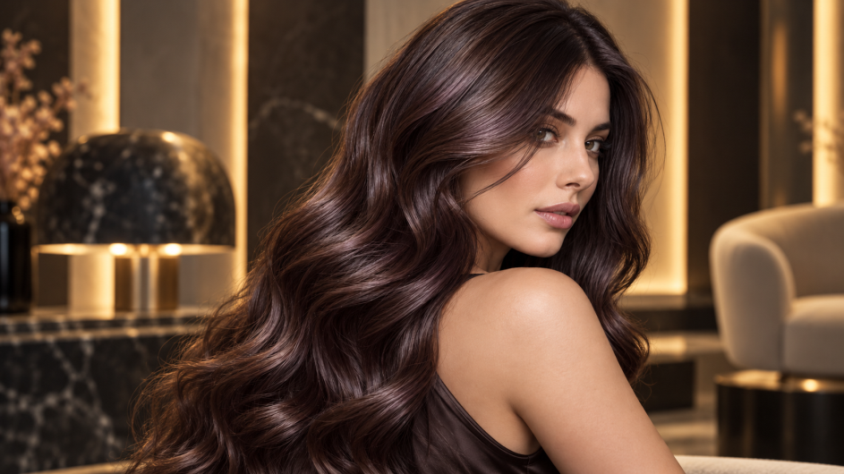
3. Creating a Cool Chocolate Brunette
Best choice: Demi-permanent color with appropriate cool reflects
Cool chocolate brunette requires controlled warmth rather than removing every warm undertone.
Violet-based reflects can soften yellow influences, while pronounced orange requires sufficient blue-based neutralization.
Duomo’s violet-based brunettes guide explains how to achieve balanced cool brunette results.
4. Blending a Small Percentage of Grey Hair
Best choice: Demi-permanent color
When clients want grey hair softened instead of fully concealed, demi-permanent color can create a more blended appearance.
Results depend on grey percentage, resistance, natural level, and formula selection. It should not be presented as equivalent to opaque permanent coverage.
For clients requiring stronger coverage, consult Duomo’s grey coverage formula framework.
5. Hair Looks Dull but the Tone Is Correct
Best choice: Clear gloss
If the existing shade is balanced, adding corrective pigment may be unnecessary.
A suitable clear gloss can enhance visible shine without intentionally changing the shade, making it a useful maintenance or finishing service.
How Long Does Each Service Last?
No toner, gloss, or demi-permanent color permanently locks in tone. Deposited pigments gradually fade, although the rate depends on the product and hair condition.
As general industry estimates, many toner services remain noticeable for approximately two to six weeks, while professional demi-permanent glosses may maintain visible results for roughly four to eight weeks.
These are overlapping ranges, not fixed distinctions. A toner made with a demi-permanent gloss formula may last similarly to the same product used for a gloss service. Some formulas fade considerably sooner.
Color longevity depends on:
- Hair porosity: Highly porous hair may absorb pigment unevenly and lose it faster.
- Washing frequency: Frequent shampooing can accelerate fading.
- Water conditions: Mineral deposits and repeated washing can affect color appearance.
- Heat styling: Excessive heat can contribute to fading and dryness.
- UV exposure: Sunlight can affect artificial pigments and hair condition.
For clients, explain that the goal is to maintain the desired tone between appointments, not permanently preserve deposited color.
Recommend appropriate color-safe cleansing products, heat protection, and individualized maintenance appointments.
How Salons Can Menu Toner and Gloss Services
Salon owners can make these services easier to understand by organizing their menus around results rather than chemistry.
Post-Lightening Toner
Position toning as part of a highlighting or blonding appointment when exposed warmth requires correction.
Explain that the toner refines the finished shade and that periodic maintenance may be necessary.
Between-Appointment Gloss Refresh
Offer a standalone gloss service for clients whose color has faded or lost shine.
A four-to-six-week refresh appointment may suit clients who notice visible fading within that period. Adjust the interval based on the individual result rather than prescribing the same schedule for everyone.
Demi-Permanent Tone and Grey Blending
Create a separate service for clients seeking richer color, subtle shade changes, or softer grey blending.
Explain how this differs from permanent color, particularly in opacity and maintenance.
Pair these services with suitable home-care recommendations and document formulas, starting levels, hair condition, and results. Consistent consultation records make future appointments more predictable.
FAQs
Is toner permanent?
Most toners used for routine color refinement are semi-permanent or demi-permanent and gradually fade. Some toning services use permanent color formulations, but their visible tonal effects can still change over time. Longevity depends on the product, starting canvas, and maintenance routine.
Can you tone and gloss in the same appointment?
Yes. A colorist can neutralize unwanted warmth and enhance shine during the same appointment. In many cases, one suitable demi-permanent formula can accomplish both objectives. Separate applications are not always necessary, and product compatibility should always be confirmed.
Does gloss lighten hair?
A conventional deposit-only gloss does not intentionally lighten natural hair color. It primarily enhances shine, refreshes existing pigment, or subtly adjusts tone. Some products marketed as glosses may have different chemical properties, so follow the manufacturer’s specifications.
Do you need a toner after every color service?
No. Toner is useful when unwanted undertones need adjustment, particularly after lightening. If the color already matches the target shade, additional pigment may be unnecessary. Excessive toning can produce unwanted coolness, darkness, or uneven results.
Can a gloss help blend grey?
Yes. A tinted demi-permanent gloss can soften the contrast between grey and naturally pigmented hair. Results vary according to grey percentage, resistance, shade selection, and formulation. A clear gloss does not provide meaningful grey coverage, and clients seeking opaque coverage generally need a different color strategy.
Final Thoughts: Choose the Result, Then the Formula
Toner, gloss, and demi-permanent color are not mutually exclusive options. Toner corrects unwanted undertones, gloss enhances shine and refreshes color, and demi-permanent chemistry can deliver either result.
For professional colorists, the best approach is to assess the starting canvas, choose the appropriate pigment, and set realistic expectations for maintenance.
For the full underlying pigment breakdown behind every tone correction, start with the underlying pigment map. Salons ready to add Duomo to their service menu can apply for a professional salon account.